|
100% hand-picked crops
Harvest separated in two buckets
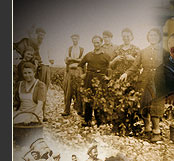
Faithful to the old adage, “To make good wine, you need good grapes”, here at Domaine de Beaurenard we harvest entirely by hand – for all the wines we make.
Each picker is given two buckets and, once the bunches are cut, separates the finest bunches from the damaged or immature grapes.
The grapes, picked at optimal maturity, are taken to the vat room in small bins so that they are not squashed, which would cause oxidation and therefore affect quality.
This stringent selection process improves the colour, smell, taste and
digestibility of our wine, and ensures that consistent quality is maintained despite the whims of nature.

|
The alliance
of tradition and
modern age
|
|
|
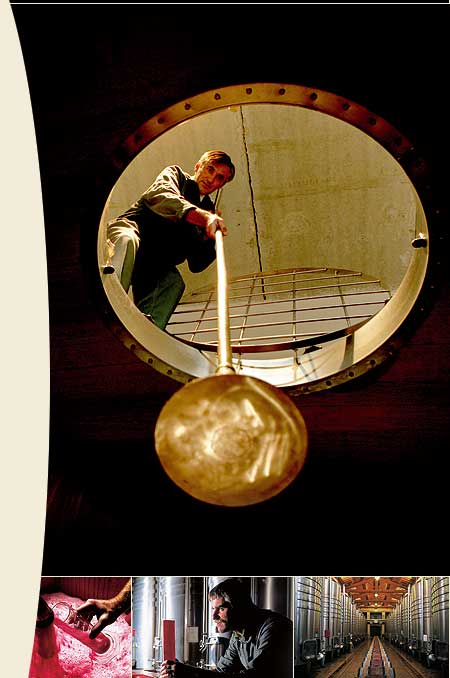
Our well-equipped vinification building -
temperature-controlled vats (some with cap-punching tools),
destemmer, pneumatic press - highlights the fundamental qualities of
our terroir and the various grape varieties. Biodynamic growing
means we can be more hands-off during vinification.
Our traditionally lenghy fermentations (15-35
days), with native yeasts (no external inputs) and constant control
of vinification temperature to preserve the natural aromas of the
grapes and soil (lowers, fruit, minerals).
The white wines are vinified at a lower
temperature to preserve the natural aromas of the grapes and soil (flowers,
fruit, minerals).
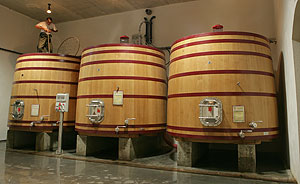
A vat room for vinification in wood,,
consisting of small truncated oak barrels, now supplements
Beaurenard's winemaking facilities. Fermentation in oak vats allows
effective cap-punching, moderate oxygenation, and a softening and
polymerisation of the tannins, to give the gives the wines a
mellower and more rounded character.
 |
Ageing : a
legacy of savoir faire
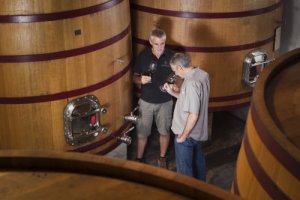
Tasting remains the cornerstone throughout cellar ageing...
Once vinified, the wines
are very quickly placed in oak for a period of malolactic
fermentation. This is the first stage of ageing, which then
continues on fine lees in oak fûts (228l) foudres (30hl) and
truncated vats (80hl) for 9 - 18 months. Ageing clarifies the
wines and helps their structure to flourish.
Each movement must be
performed with timely precision, in accordance with the lessons
of previous generations. Topping-up, racking, fining (if
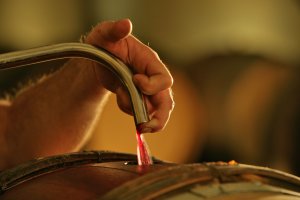
necessary), and regular tasting with the pipette, and meticulous
work on all the wines to help them excel. These small details
ultimately make a considerable difference.
Bottles at the estate for more than
a century.
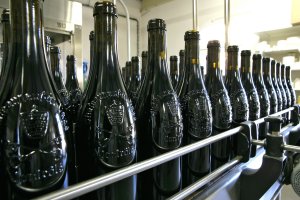
Bottling is a delicate stage which we treat with great care. The
bottles are stored in our cellars, seven metres underground.
|
|
|